Form 15 / Form 16
Needed for Home Loan
Available Online 24/7
Instant View Online
What is an Encumbrance Certificate Tamil Nadu?
An Encumbrance Certificate (EC) is an official document issued by the Tamil Nadu Registration Department that contains the complete transaction history of a property. It shows all registered transactions such as sale, mortgage, gift, lease, and legal charges recorded against a property during a specific period.
In simple terms, an EC tells you whether a property is free from any financial or legal liabilities. If a property has an outstanding home loan, court attachment, or any dispute registered against it, all of this will appear in the Encumbrance Certificate. This makes EC one of the most important documents to check before buying any property in Tamil Nadu.
In Tamil Nadu, EC is issued by the Sub-Registrar Office under the Inspector General of Registration and can be viewed and downloaded online through the official TNREGINET portal at tnreginet.gov.in.
Why is Encumbrance Certificate Important?
EC is required in many important situations related to property. Here is why you need it:
- Before Buying Property — Check EC to confirm the seller is the rightful owner and the property has no unpaid loans, mortgages, or legal disputes.
- Home Loan Application — Banks and financial institutions require EC as a mandatory document before approving any home loan or loan against property.
- Patta Transfer — When applying for patta (land record) transfer at the Revenue Department after purchasing property, EC is a required document.
- Property Registration — Sub-Registrar offices often ask for EC as part of the documents during property registration to verify the title chain.
- Legal Disputes — EC serves as official documentary evidence in property-related court cases to establish ownership history and transaction records.
Types of Encumbrance Certificate — Form 15 vs Form 16
There are two types of Encumbrance Certificate issued in Tamil Nadu. Understanding the difference is very important before you apply.
| Feature | Form 15 (EC with Transactions) | Form 16 (Nil EC) |
|---|---|---|
| What it means | Property has registered transactions in the requested period | No registered transactions found in the requested period |
| What it shows | Sale, mortgage, gift, court orders, lease details | Certificate that property is free from encumbrances |
| When issued | When any transaction is registered for the property | When no transaction is found for the requested period |
| Good or Bad? | Depends review all transactions carefully | Good property is clean for that period |
| Used for | Verifying ownership chain and loan history | Proving property is encumbrance-free for loans |
Quick Tip: Always request EC for a minimum of 30 years when buying property. This gives you a complete picture of the property’s history and reduces the risk of hidden ownership disputes.
What Information Does an EC Show?
A Form 15 Encumbrance Certificate in Tamil Nadu contains the following details for each registered transaction:
| Field | What It Tells You |
|---|---|
| Document Number | Unique registration number of the deed |
| Date of Registration | When the transaction was officially registered |
| Nature of Document | Type — sale deed, mortgage, gift deed, etc. |
| Executant (Seller/Mortgagor) | Name of the person who transferred the property |
| Claimant (Buyer/Bank) | Name of the person or institution who received rights |
| Property Description | Survey number, extent, and location of the property |
| Consideration Amount | Value at which the property was sold or mortgaged |
EC Fees in Tamil Nadu 2026
EC fees in Tamil Nadu are charged based on the number of years you request the certificate for. Fees are the same whether you apply online or at the Sub-Registrar Office.
| Period Requested | Fee (Approx.) |
|---|---|
| Up to 30 years | ₹15 to ₹35 (based on years) |
| Each additional year beyond 30 | ₹5 per year |
| Online view (non-certified) | Free |
Note: For home loan purposes, banks usually accept the online EC viewed through TNREGINET. For court or legal use, you need a certified EC from the Sub-Registrar Office.
How to Apply for Encumbrance Certificate Tamil Nadu
You can apply for EC either online via TNREGINET or offline at your local Sub-Registrar Office. The online method is faster and available 24 hours.
Login to TNREGINET Portal
Go to tnreginet.gov.in and log in to your account. If you do not have an account, create a free one in 2 minutes. Read our TNREGINET login guide for help.
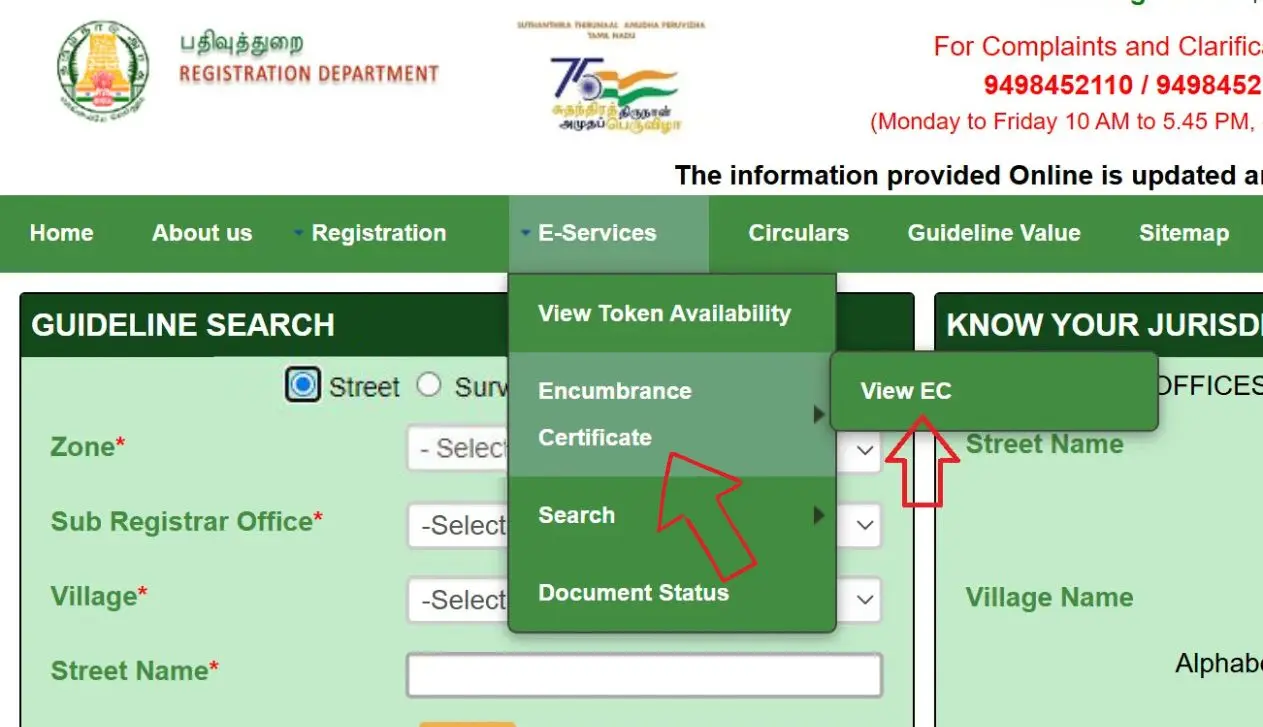
Go to EC Services Section
After login, look for the Encumbrance Certificate or EC option in the menu. Click on it to open the EC search page. For a full walkthrough of this step, see our TNREGINET EC View guide.
Enter Property and Period Details
Fill in the EC application form with the following details: Sub-Registrar Office, village name, survey number or document number, and the period (start year to end year) for which you need the EC. You can search by survey number, owner name, or document number.
View and Download EC
The portal will display the EC with all registered transactions. You can view it on screen for free or download it as a PDF. For a certified copy with official seal, you need to apply at the Sub-Registrar Office and pay the applicable fee. Learn more at our EC download guide.
Apply for Certified EC at SRO (if needed)
If you need a certified EC for bank or legal purposes, submit a written application at your local Sub-Registrar Office with the property details, period required, and pay the applicable fee. The certified EC is usually ready within 2 to 5 working days.
EC Validity Period How Long is EC Valid?
There is no fixed expiry date for an Encumbrance Certificate. However, banks and government departments typically accept an EC that is not older than 6 months from the date of issue. For property purchase or legal use, always get a fresh EC that covers up to the current date.
For home loans, most banks in Tamil Nadu ask for an EC covering the last 15 to 30 years. Some banks require EC up to the present date, so always confirm with your bank before applying.
What EC Does Not Cover Important Limitations
EC only shows transactions that have been officially registered at the Sub-Registrar Office. It does not cover unregistered agreements, oral transactions, or disputes not recorded by the Registration Department. Always do a thorough legal verification of all original title documents in addition to checking the EC before purchasing any property.
📚 Related Guides You May Find Helpful
- EC Online Tamil Nadu 2026 — Step-by-step guide to view EC online on TNREGINET.
- TNREGINET EC View Guide — How to search and view EC on the portal.
- View and Download EC Certificate Online — Download your EC as PDF from TNREGINET.
- TNREGINET Login and Registration Guide — Create your free account to access EC services.
- Villangam Certificate Tamil Nadu — Another key ownership document often needed alongside EC.
Frequently Asked Questions
Conclusion
An Encumbrance Certificate is one of the most essential documents in any property transaction in Tamil Nadu. Whether you are buying property, applying for a home loan, or settling a legal dispute, EC gives you a clear and verified picture of the property’s transaction history. Thanks to TNREGINET, you can now view EC online for free in seconds without visiting any government office. For certified EC or further help, contact the TNREGINET helpdesk directly.