Mandatory by Law
Within 4 Months
Book Slot Online
600+ SRO Offices
What is Property Registration in Tamil Nadu?
Property registration in Tamil Nadu is the legal process of recording a property transaction in the official government records maintained by the Tamil Nadu Registration Department. When you buy or sell a property, the sale deed must be registered at the Sub-Registrar Office (SRO) under the Inspector General of Registration Tamil Nadu.
Without registration, the ownership transfer is not legally recognized. This means even if you pay the full amount for a property, you are not the legal owner until the sale deed is registered at the Sub-Registrar Office. Registration creates a permanent public record that protects your ownership rights against future disputes.
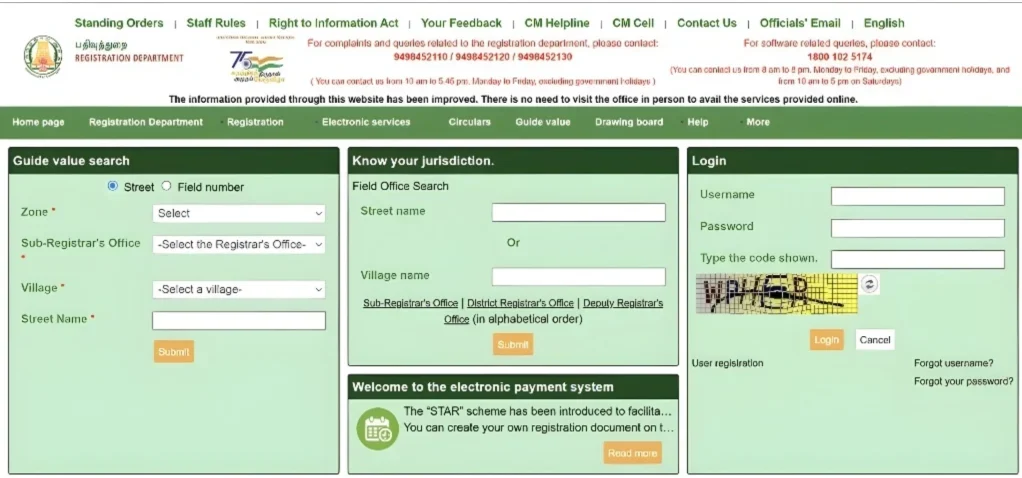
In Tamil Nadu, all property registrations are done through the official TNREGINET portal at tnreginet.gov.in. You can book your appointment online and check guideline values before visiting the SRO office.
Why is Property Registration Mandatory in Tamil Nadu?
Under Section 17 of the Indian Registration Act 1908, registration of property documents above ₹100 in value is compulsory. Skipping registration can lead to serious legal and financial problems. Here is why you must register:
- Legal Ownership Proof — Only a registered deed proves you are the legal owner of the property. Courts accept registered documents as valid evidence.
- Home Loan Eligibility — Banks and financial institutions require a registered sale deed before approving any home loan or mortgage.
- Protects Against Fraud — Once registered, the property transaction becomes a public record, making it impossible for the seller to sell the same property to another person.
- EC and Future Transactions — All future buyers will check the Encumbrance Certificate of the property. An unregistered transaction will not appear in the EC, creating legal complications.
- Mutation of Land Records — After registration, you can update the patta (land record) in your name at the Revenue Department, which is needed for property tax payment.
Stamp Duty and Registration Charges in Tamil Nadu 2026
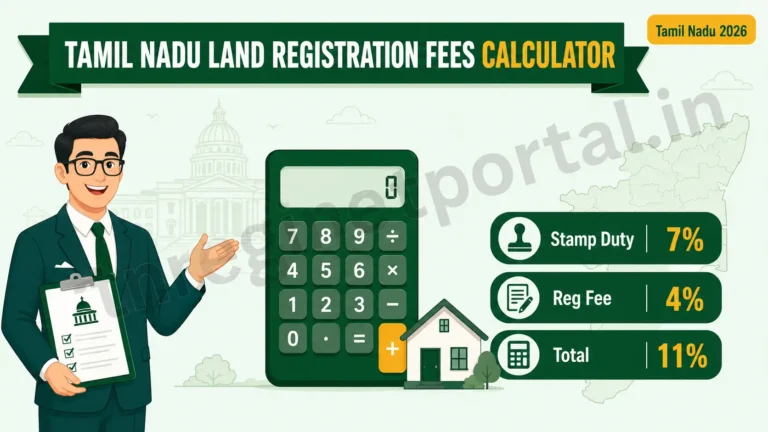
Before registering a property, you need to pay stamp duty and registration charges to the government. These are calculated based on the guideline value or the actual sale price, whichever is higher. Use our Stamp Duty Calculator Tamil Nadu to calculate your exact amount.
| Document Type | Stamp Duty | Registration Fee |
|---|---|---|
| Sale Deed | 7% of property value | 4% of property value |
| Gift Deed (Family) | 1% (max ₹25,000) | 1% (max ₹4,000) |
| Gift Deed (Others) | 7% of property value | 4% of property value |
| Partition Deed | 1% (max ₹25,000) | 1% (max ₹4,000) |
| Settlement Deed (Family) | 1% (max ₹25,000) | 1% (max ₹4,000) |
| Lease Deed (up to 30 yrs) | 1% of lease amount | 1% of lease amount |
| Power of Attorney | ₹100 fixed | ₹1,000 fixed |
Important: Stamp duty and registration charges are calculated on the guideline value set by the Inspector General of Registration or the actual sale price — whichever is higher. Check the current guideline value for your area using our Guideline Value checker before proceeding.
Documents Required for Property Registration in Tamil Nadu
Keep the following documents ready before visiting the Sub-Registrar Office. Missing any document will delay your registration.
| Document | Who Needs to Bring |
|---|---|
| Original Sale Deed (drafted by advocate) | Both Buyer and Seller |
| Aadhaar Card (original + photocopy) | Both Buyer and Seller |
| PAN Card | Both Buyer and Seller |
| Two Passport Size Photos | Both Buyer and Seller |
| Encumbrance Certificate (EC) | Seller |
| Patta / Chitta (land records) | Seller |
| Previous Sale Deed / Title Documents | Seller |
| Property Tax Receipt (latest) | Seller |
| Stamp Duty Payment Receipt (e-Stamp) | Buyer |
| Two Witnesses with ID Proof | Both Buyer and Seller |
How to Register Property in Tamil Nadu — Step by Step
Follow these steps to complete your property registration in Tamil Nadu without any confusion.
Check Guideline Value of Your Property
Before anything else, check the guideline value of the property on TNREGINET. This is the minimum value set by the government for your area. Your stamp duty will be calculated based on this value or the actual sale price — whichever is higher. Use our Guideline Value checker to find the current rate.
Get the Sale Deed Drafted by an Advocate
Hire a registered advocate or document writer to prepare the sale deed. The deed must clearly mention the property details, full names and addresses of buyer and seller, sale consideration amount, and mode of payment. The deed must be typed on stamp paper or e-Stamp paper of the correct value.
Pay Stamp Duty Online
Pay the stamp duty online through the TNREGINET portal or at a licensed stamp vendor. You will receive an e-Stamp certificate with a unique identification number. Keep this receipt safely as it must be submitted at the Sub-Registrar Office during registration.
Book Appointment on TNREGINET
Log in to tnreginet.gov.in and book a slot at your nearest Sub-Registrar Office. Select your district, SRO office, date, and time. You will receive a confirmation with your appointment number. Walk-in registrations without appointment are not accepted at most SRO offices.
Visit the Sub-Registrar Office
On the appointment date, both buyer and seller must be present at the SRO along with two witnesses. Carry all original documents and their photocopies. The Sub-Registrar will verify the documents, take biometric data and photographs of both parties, and register the deed.
Collect Your Registered Document
After successful registration, the Sub-Registrar will issue a registered copy of your sale deed with the registration number, date, and official seal. You can also download a certified copy later from TNREGINET. After receiving the registered deed, apply for patta transfer at your local Revenue Department office.
Common Mistakes to Avoid During Property Registration
📚 Related Guides You May Find Helpful
- Stamp Duty Calculator Tamil Nadu 2026 — Calculate exact stamp duty and registration charges for your property.
- How to Check Guideline Value on TNREGINET — Find the government minimum price for your area before registration.
- EC Online Tamil Nadu 2026 — Verify the property’s transaction history before buying.
- TNREGINET Login and Registration Guide — Create your free account to book appointment and access all services.
- Villangam Certificate Tamil Nadu — Get the ownership proof certificate online after registration.
Frequently Asked Questions
Conclusion
Property registration in Tamil Nadu is a straightforward process when you are well prepared. Check the guideline value, get the deed drafted, pay stamp duty, book your appointment on TNREGINET, and visit the Sub-Registrar Office with all documents. Completing the registration on time protects your ownership and gives you legal security over your property. If you need help with any step, the TNREGINET helpdesk is available to assist you.